


Sine values for 30, 45, and 60 degrees with explanations
The sine values for 30, 45, and 60 degrees form the foundation of trigonometry. On this page, you will find sin 30°, sin 45°, and sin 60°, along with the step-by-step derivation for each value. This knowledge is essential for solving geometry and physics problems and for preparing for the EGE and OGE exams.
Sine of 30 degrees
We need to find the sine of 30 degrees.


Opposite the 30° angle lies a leg; let us designate it as a.
In this case, the hypotenuse is twice as long, because the leg opposite the 30° angle is equal to half the hypotenuse.
Canceling out a:
Thus,
Sine of 45 degrees
We need to find the sine of 45 degrees.

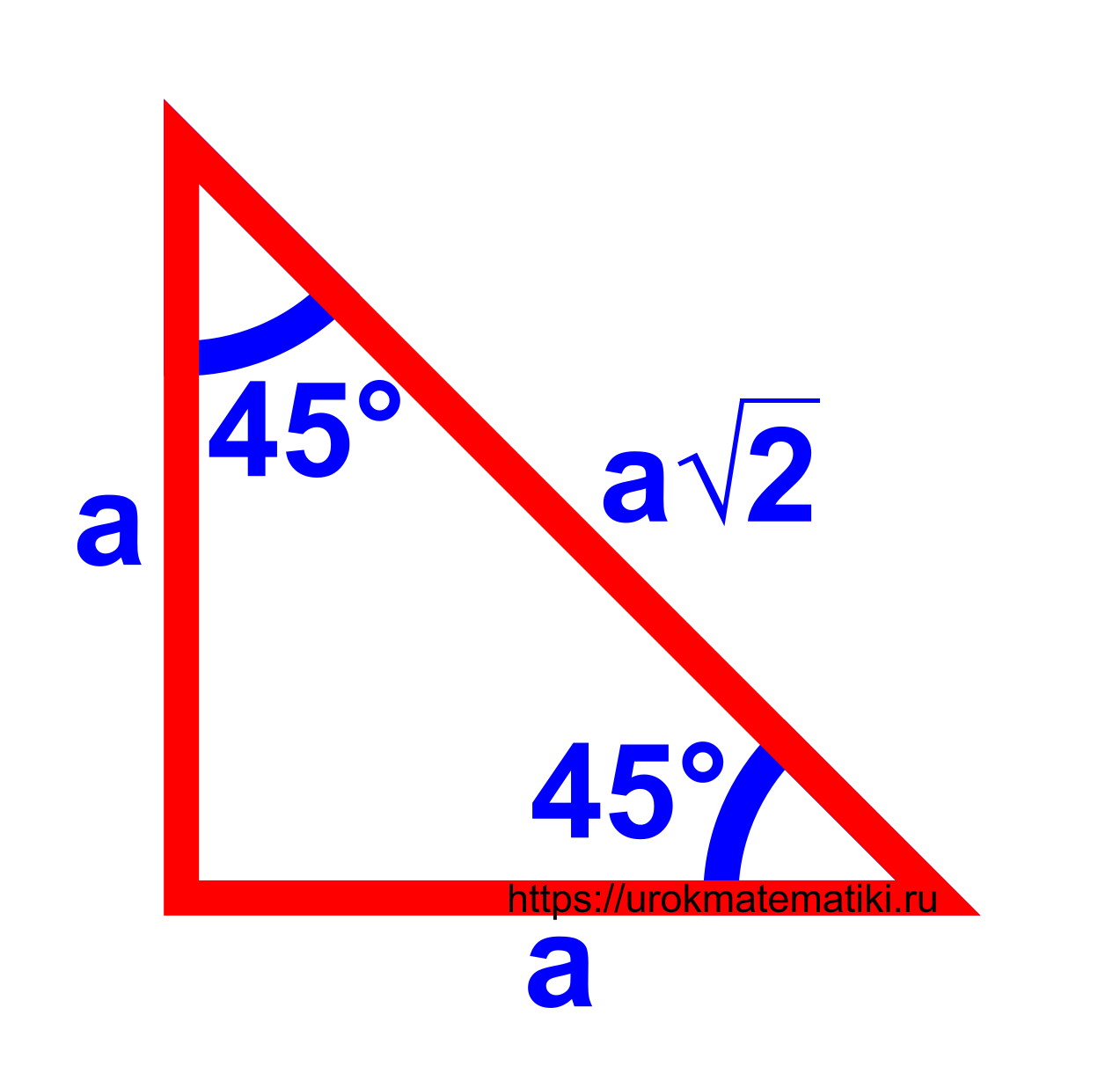
If one angle of a right-angled triangle is 45°, the other angle is also 45°, resulting in an isosceles triangle. Let us denote the sides as a.
The sine is the ratio of the opposite leg to the hypotenuse, but the hypotenuse is unknown. We find it using the Pythagorean theorem: the sum of the squares of the legs, followed by taking the square root.
Thus
Cancel out a:
Rationalize the denominator by multiplying the numerator and denominator by √2.
So, this is a standard table value.
Sine of 60 degrees
We need to find the sine of 60 degrees.

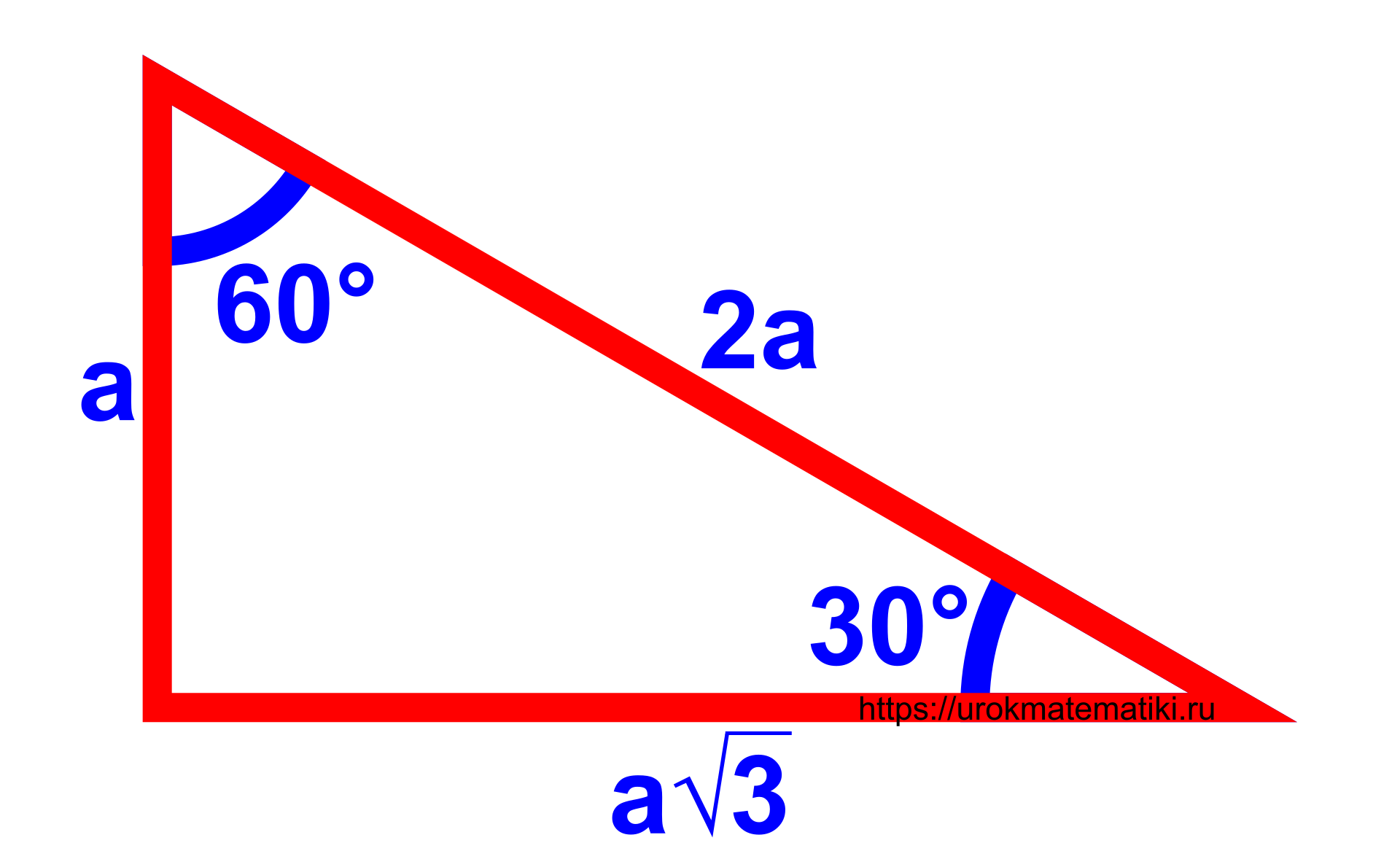
To do this, consider the triangle from the first case.
Here, the hypotenuse is 2a, and the known leg is taken as a.
Using the Pythagorean theorem, we can find the leg opposite the 60° angle.
We find the sine of 60°—the ratio of the opposite leg to the hypotenuse:
Cancel out a:
Thus,
Sine value table
| Angle | sin |
|---|---|
| 30° | |
| 45° | |
| 60° |
📚 See also:
